Why Identity is Your Biggest Cybersecurity Challenge (and How to Lock it Down)
In today’s fast-paced digital world, your business is constantly evolving. You’re adopting new technologies, empowering your teams, and striving for efficiency. But amidst all this progress, there’s one area that often gets overlooked, yet holds the key to your entire security posture: identity. Think of it as the digital front door to your business. If that door is weak, or worse, wide open, everything inside is at risk.
Let’s dive into why identity is such a critical weakness, and what you can do about it.
Identity: The Big Weakness for SMBs
For small to medium-sized businesses, the challenges are particularly acute. You need to move fast to stay competitive, and keeping IT costs down is always a priority. This often means relying on third-party providers, hoping they’re doing their due diligence on security. Meanwhile, your users want more access to more apps, often on their personal devices, and sometimes they’ll even install their own software. The plain truth is, security knowledge is often limited, even among some IT providers. This leaves you vulnerable.
Here’s why SMBs are often an easy target:
- The Need for Speed vs. Security: You’re focused on growth, and sometimes that means security takes a back seat. Quick fixes trump robust safeguards.
- Budgeting for IT: A Tightrope Walk: Keeping IT costs low often means less control over security, especially if you’re outsourcing. You’re trusting another company with your digital keys.
- Users Want Freedom: Your team wants easy access to everything, on any device. This can lead to “shadow IT”—apps installed without your knowledge—creating unmonitored entry points.
- Security Gaps: Let’s be honest, cybersecurity expertise isn’t always a core competency for every small business or even all IT providers.
- Old-School Passwords: Many SMBs still rely on weak, easily guessed password policies.
- Flawed 2FA: While two-factor authentication (2FA) is good, many implement it poorly (like relying solely on SMS, which is surprisingly easy to bypass).
- The Password Problem: Employees often reuse the same weak passwords across multiple systems, both work and personal. This is like having one key for your house, car, and office.
So, what do cybercriminals see when they look at your business? An easy target. They have automated tools that relentlessly scan for weaknesses, and they only need one crack in your armor. Perhaps it’s a user who reused a password that was compromised in a massive data breach (think LinkedIn, Facebook, TicketMaster – the list goes on). Or maybe it was someone who clicked on a convincing phishing email and unknowingly handed over their credentials. Once they have access, it’s frighteningly easy for them to escalate their privileges and effectively “own” your business, often without you even realizing it until it’s too late.
What Can You Do to Protect Identities?
The good news is, you’re not helpless. There are many effective steps you can take to significantly strengthen your identity security, making it a fortress rather than a flimsy door.
Practical Steps to Secure Your Digital Front Door:
- Hire the Experts: Don’t go it alone. Partner with a reputable cybersecurity company. They understand the landscape best and can guide you toward the most effective and cost-efficient security measures.
- Make Security Easy for Users, Hard for Hackers: If security is too cumbersome for your team, they’ll find workarounds that often compromise security. Think user-friendly solutions.
- Separate Admin Accounts: Always maintain completely separate administrative accounts from your regular user accounts. If a cybercriminal gains access to a standard user account, they’ll have to work much harder to elevate their privileges to an admin level. Monitor these admin accounts rigorously.
- Strong Passwords (and Smart Changes): Aim for passwords longer than 12 characters, ideally a memorable passphrase that includes a mix of upper and lower case letters, numbers, and symbols. Encourage users to only change their passwords if they suspect a compromise, rather than on a rigid schedule.
- Embrace Password Managers: Encourage (or even require) the use of password managers like Dashlane, 1Password, or similar tools. Many are free for small teams or low-cost. Users only need to remember one strong master password, and the manager handles the rest, ensuring each system has a unique, complex password. This stops the “one compromise, all compromises” problem.
- Go Passwordless! Even better than password managers is moving towards a passwordless future with tools like Cisco Duo and Passkeys. This eliminates the password as a vulnerability altogether.
- Utilize Strong MFA: Implement Multi-Factor Authentication (MFA) using biometrics (fingerprint, face ID) or strong tokens (hardware keys like Yubikeys or software authenticators like Google Authenticator or Duo Authenticator). Avoid SMS-based 2FA as a primary method due to its vulnerabilities.
- Implement Risk-Based Authentication: Don’t just authenticate once. Continuously assess the risk. Has the user’s device changed? Are they logging in from an unusual location? Are they trying to access a new, sensitive service? If the risk increases, prompt for additional verification.
- Centralize Access with SSO: Utilize Single Sign-On (SSO) for every system and application you can. Centralize this through a service such as Cisco Duo. This reduces the number of credentials users need to manage and provides a central point for access control.
- 24/7 Monitoring: Cybercriminals don’t work 9-to-5. Implement 24/7 monitoring of your access logs. This allows you to detect and respond to suspicious activity immediately, no matter where in the world the attacker is.
A Powerful Solution to Consider: Cisco Duo
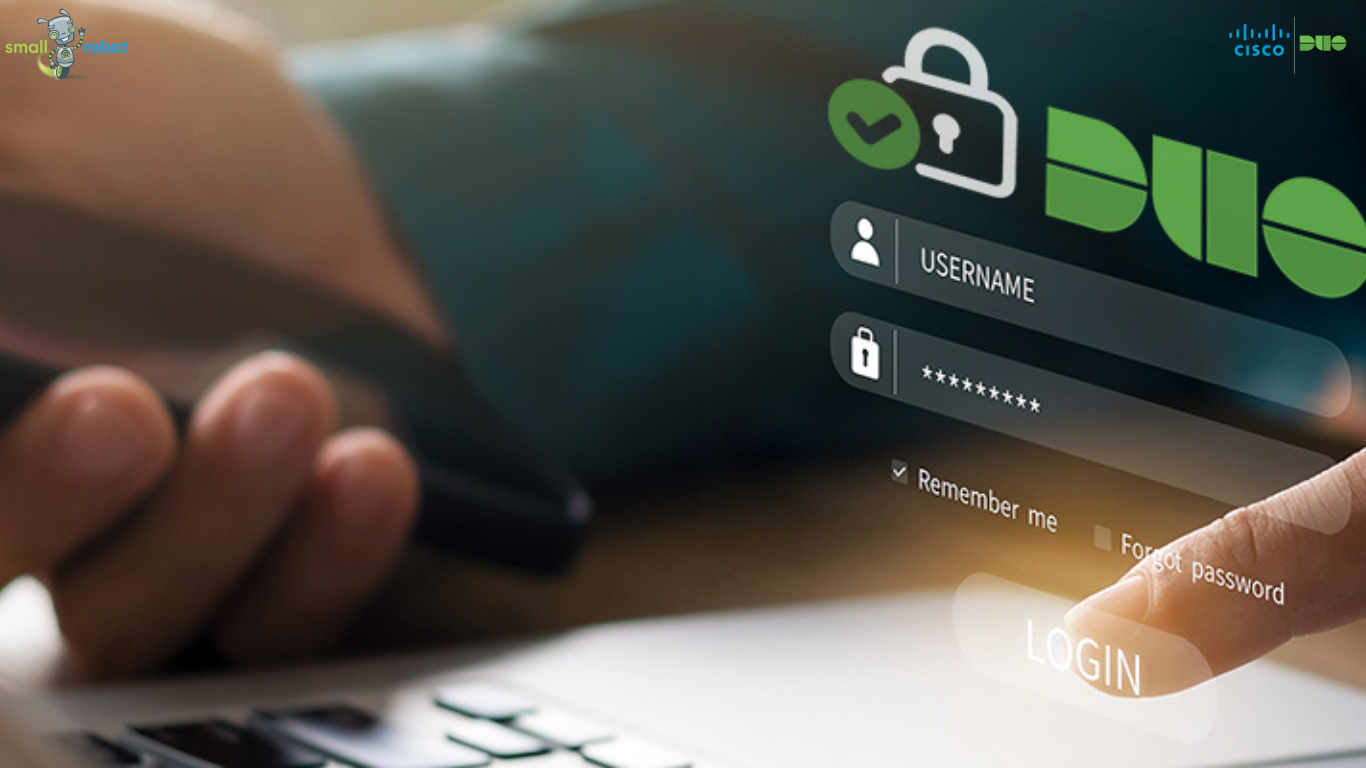
One of the leading solutions designed to simplify and strengthen how people access your business’s applications and data is Cisco Duo. At its core, Duo provides robust multi-factor authentication (MFA), ensuring that only verified users on trusted devices can get in. But it’s more than just MFA! Duo also offers seamless Single Sign-On (SSO) for a streamlined login experience across all your apps, along with capabilities for passwordless authentication, device health checks, and adaptive access policies that respond to real-time risk. This comprehensive approach helps build a strong foundation for a Zero Trust security model, protecting against credential theft and unauthorized access, whether your team is in the office or working remotely.
Ready to see how Cisco Duo can secure your digital front door? We offer a free trial, so you can experience the powerful, user-friendly protection firsthand.

See Cisco Duo in Action
Curious how Cisco Duo can protect your business? Experience its powerful features and user-friendly design firsthand.
Identity Challenges for the Enterprise
For larger organizations, the scale of the identity challenge grows exponentially. While many of the SMB tips still apply, enterprises face added complexities with a vast array of users, applications, and different types of identities. Here, we’ll focus primarily on user identities, but it’s important to remember that service accounts, cloud accounts, and API access also represent critical identity vulnerabilities.
Key Challenges & Tips for Enterprises:
- Scale and Complexity: Managing identities for thousands of employees, contractors, and partners across countless applications is a monumental task.
- User Experience Still Matters: Just like with SMBs, if security is too cumbersome for enterprise users, they will find ways around it, creating vulnerabilities. Make it easy for them to be secure.
- Strict Separation of Admin Accounts (Amplified): This is even more critical in an enterprise. Ensure administrative accounts are completely separate from standard user accounts and that their access is meticulously monitored and controlled.
- Privileged Access Management (PAM): For highly sensitive access, implement PAM solutions. This means users request access only when needed (“just-in-time” access) and for the specific task at hand, with robust auditing.
- Enterprise-Grade Password Management: While individual password managers are great, enterprises need centralized solutions that can enforce policies and provide oversight for all employee passwords.
- Embrace Passwordless at Scale: Enterprise-level passwordless solutions (like those offered by Cisco Duo) are crucial for reducing the attack surface related to passwords across a large organization.
- Robust MFA Across the Board: Implement strong MFA for all users, integrating it deeply into your authentication infrastructure.
- Advanced Risk-Based Authentication: Leverage sophisticated analytics and machine learning to continuously assess risk based on user behavior, device posture, location, and access patterns.
- Comprehensive SSO Implementation: SSO is non-negotiable for enterprises. Centralize all application access through a robust SSO solution.
- Continuous 24/7 Monitoring and Threat Detection: Enterprises are constant targets. Invest in Security Information and Event Management (SIEM) and Security Orchestration, Automation, and Response (SOAR) solutions to provide continuous monitoring and rapid response to identity-related threats.
- Honey Accounts: Deploy “honey accounts”—fake user accounts with no legitimate purpose. If an attacker tries to access one of these, it’s an immediate indicator of compromise, triggering alerts and allowing you to investigate.
Protecting identities is no longer just an IT task; it’s a fundamental business imperative. By understanding the weaknesses and proactively implementing these suggestions, you can significantly bolster your security posture and ensure your digital front door is firmly locked.
What’s one step you’re going to take this week to strengthen your business’s identity security?
Let Small Robot be your guide. Call us on 1300 870 702, email us at info@smallrobot.ai, or visit our website https://www.smallrobot.ai/ to discuss your needs.